How it reads on a shop wall
A glass enclosure is bought with the eyes, and it is bought from the aisle. Both ends are glazed, so a unit facing the walkway shows the animal from the side as well as the front — which is the difference between a wall of boxes and a wall that sells.
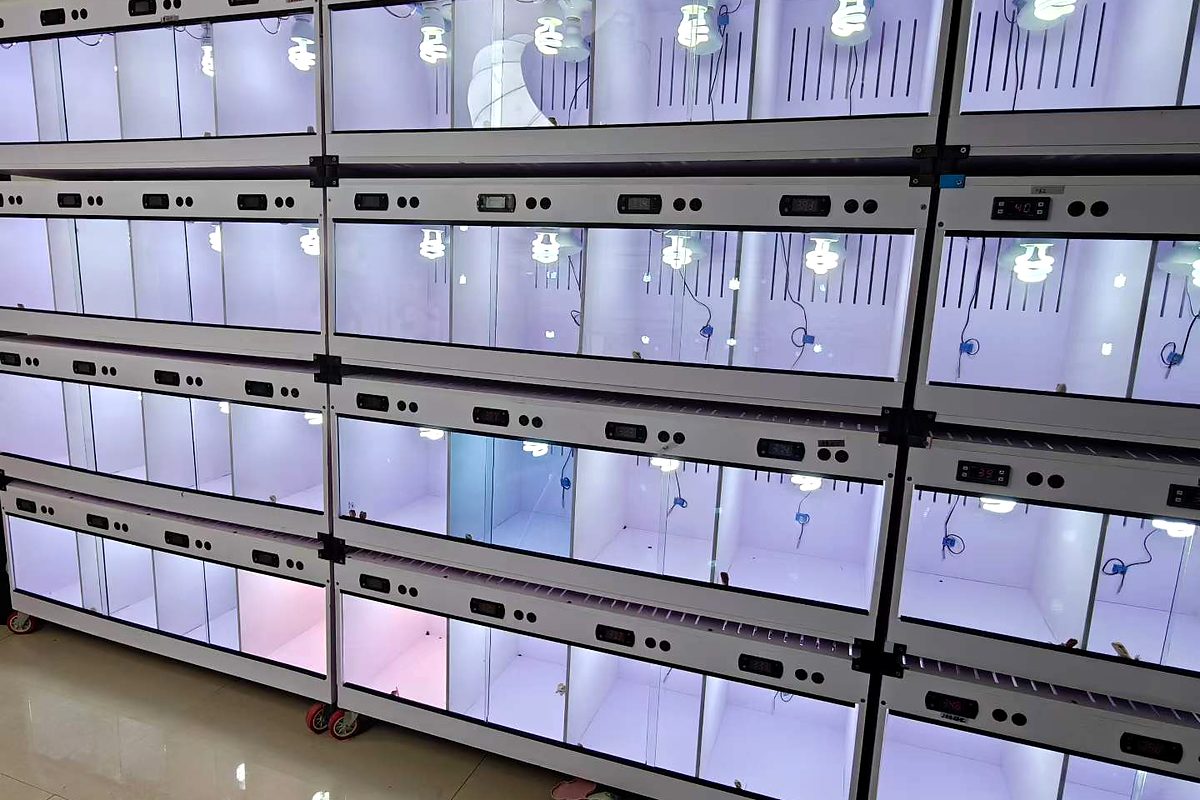
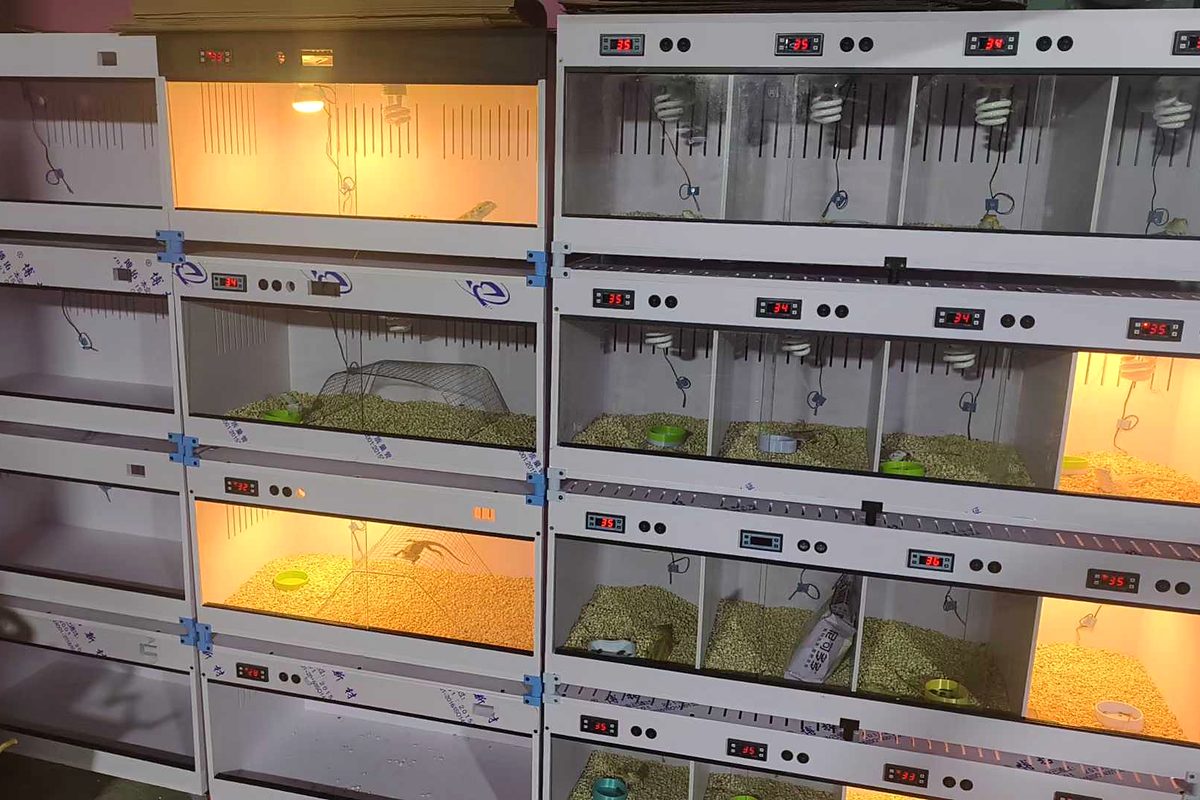
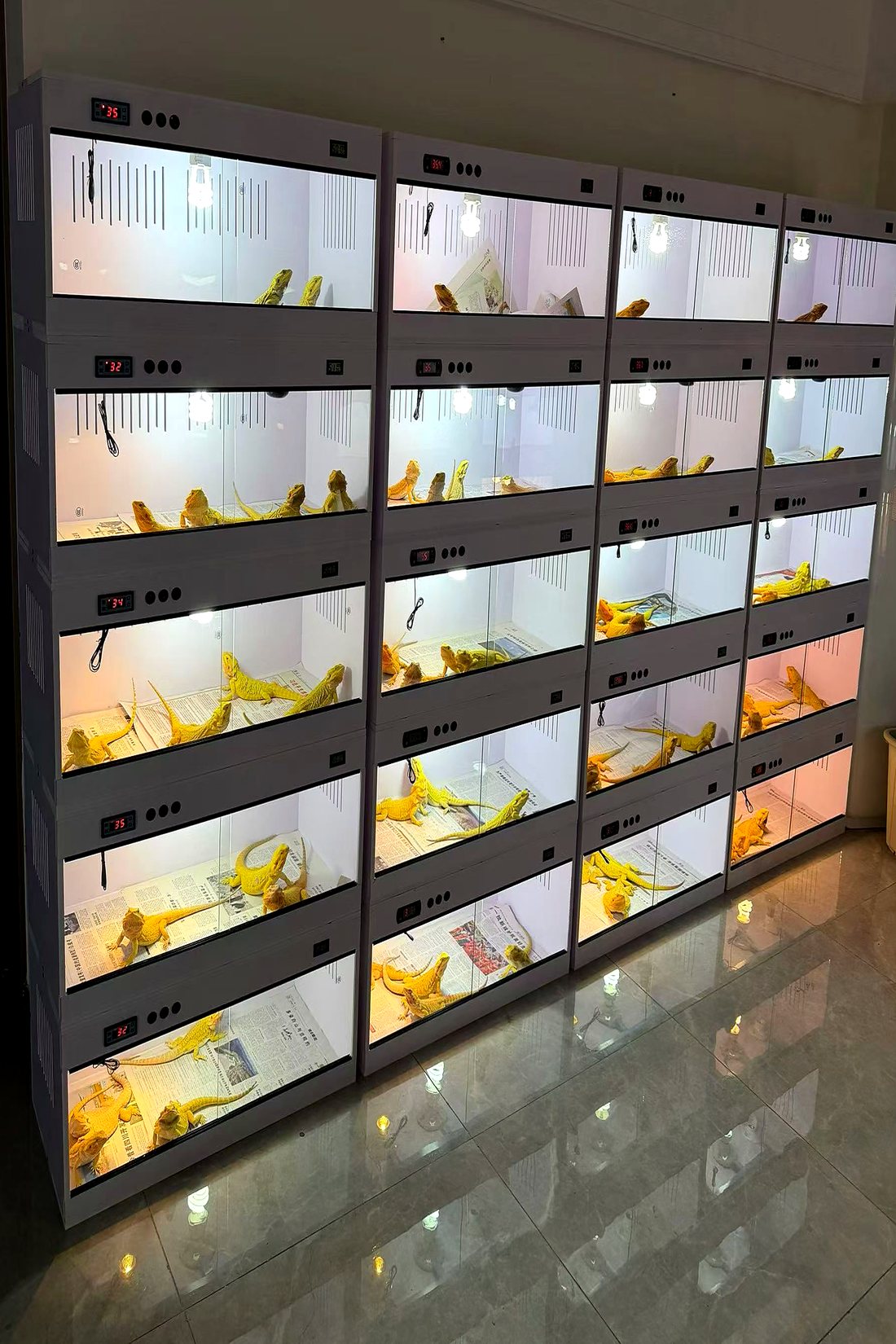
A wall of them, all lit, one aisle
This is a stocked wall: same shell repeated at one size, backlit by the lamps inside. Repeating one model reads as a range; mixing five sizes reads as a warehouse. That is why we suggest starting with one size and one colourway per market.
Glass at both ends, not just the front
On a shelf run, a customer walks along the front and then turns the corner. If the ends are solid, the second angle shows a white panel. Glazed ends mean the second angle still shows the animal, and the unit keeps selling from the walkway.
The trade-off is honest: a glass end loses a little insulation against a solid panel. That is why the heated versions carry a controller per zone and why we log the temperature at the ends as well as the middle.
What the customer sees at home
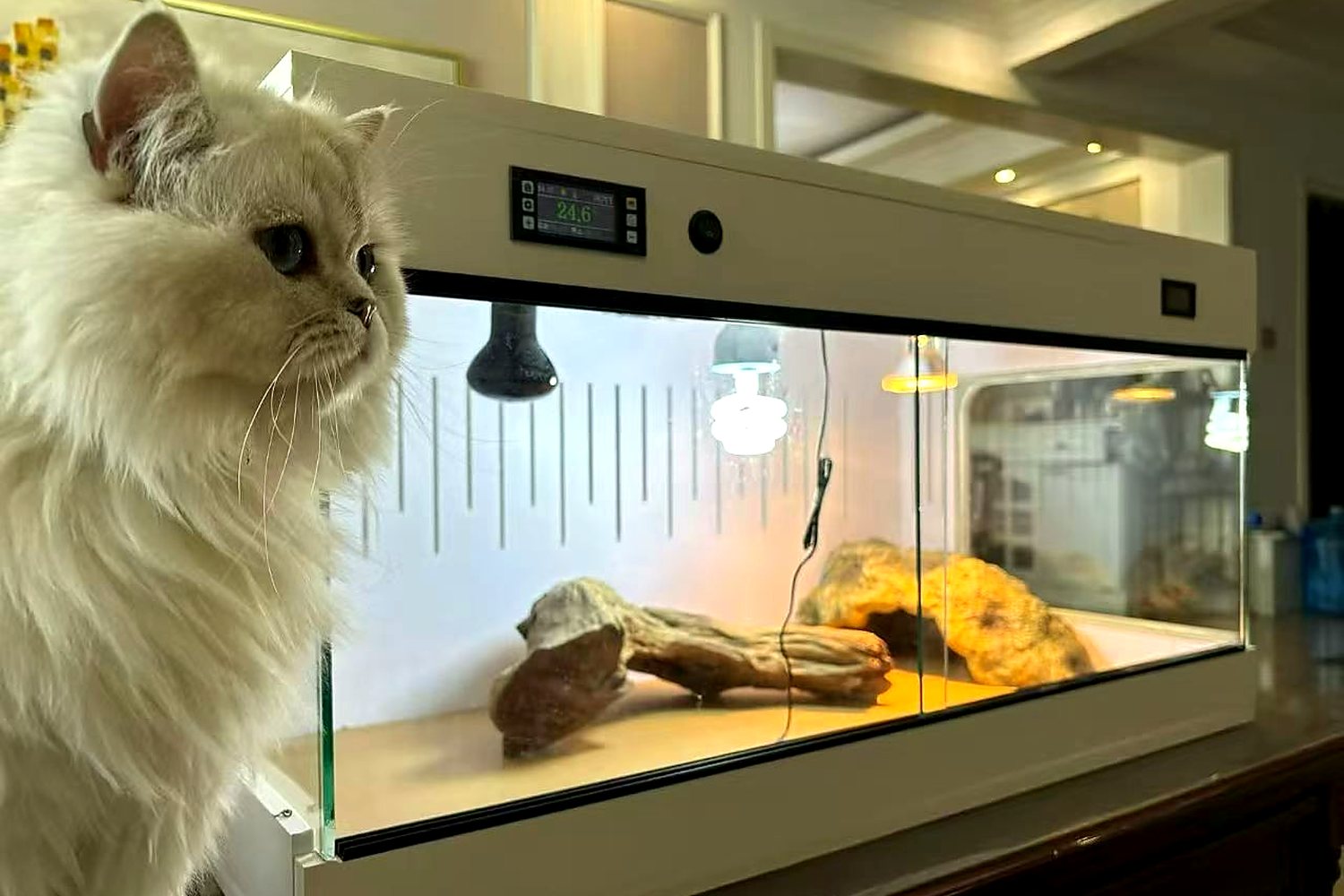
The same front glass, at eye level, in a furnished room. No frame around the panel and no visible fixings inside — the animal is the only thing behind the glass.
Built to be looked into, not at
The front is tempered glass, sliding, in an aluminium track. The interior face carries no screws and no brackets, so the animal is not climbing around hardware.
Ventilation runs through the rear panel, which keeps the visible faces clean and puts the warm, moist air out of the back rather than across the customer's floor.
Planning a wall
Tell us the wall length and the height of your shelving, and we will come back with the size mix that fills it with the fewest cartons. Photos of your current display are enough to start.