Unheated
No controller · for buyers who fit their own heat source
Lowest unit cost
Insulated panels, sliding tempered glass, and a digital controller fitted at the factory. Nine sizes from 40×30×30 to 120×60×60 cm — unheated, single-zone or dual-zone — and every one of them flat-packs into a carton under 16 cm deep.
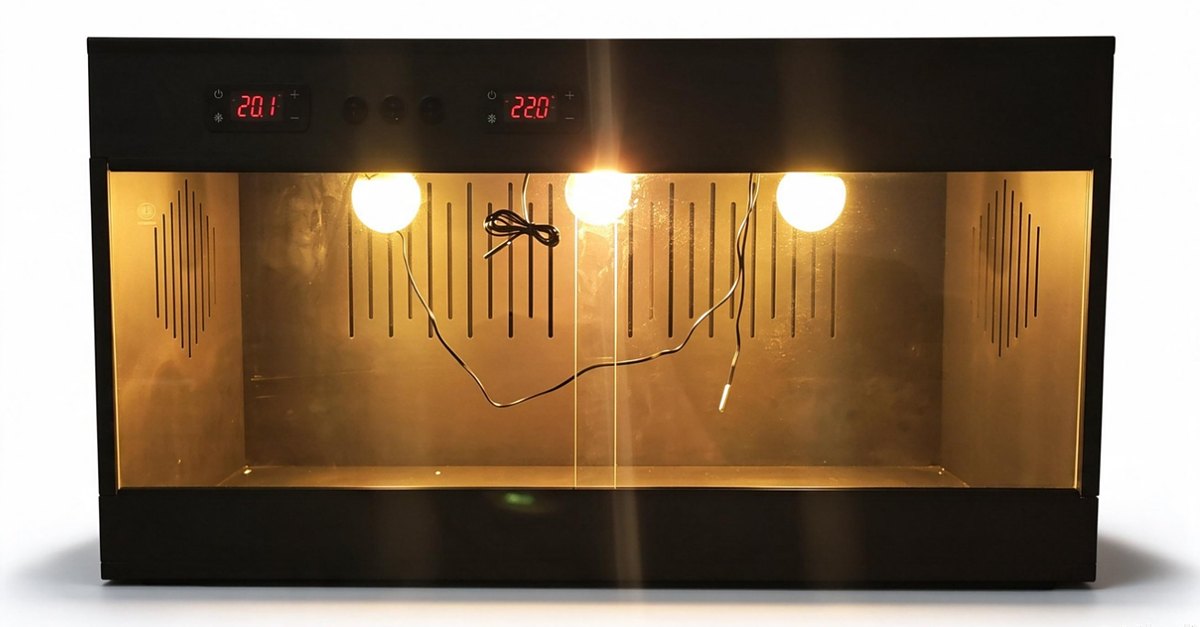
One panel system, one carton, one assembly method. The only difference is the control rail along the top — and what it can hold.
No controller · for buyers who fit their own heat source
Lowest unit cost
One digital controller · one set point for the whole enclosure
Most ordered
Two independent controllers · two set points on one enclosure
For a temperature gradient
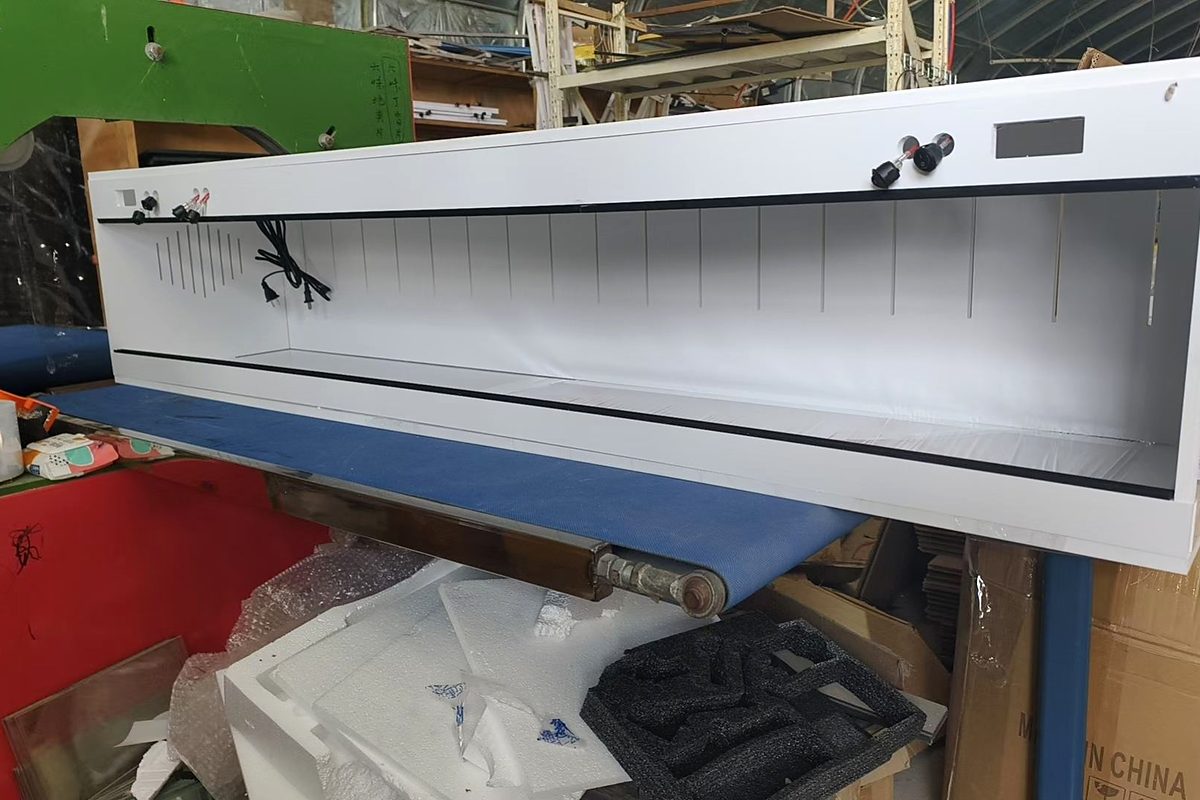
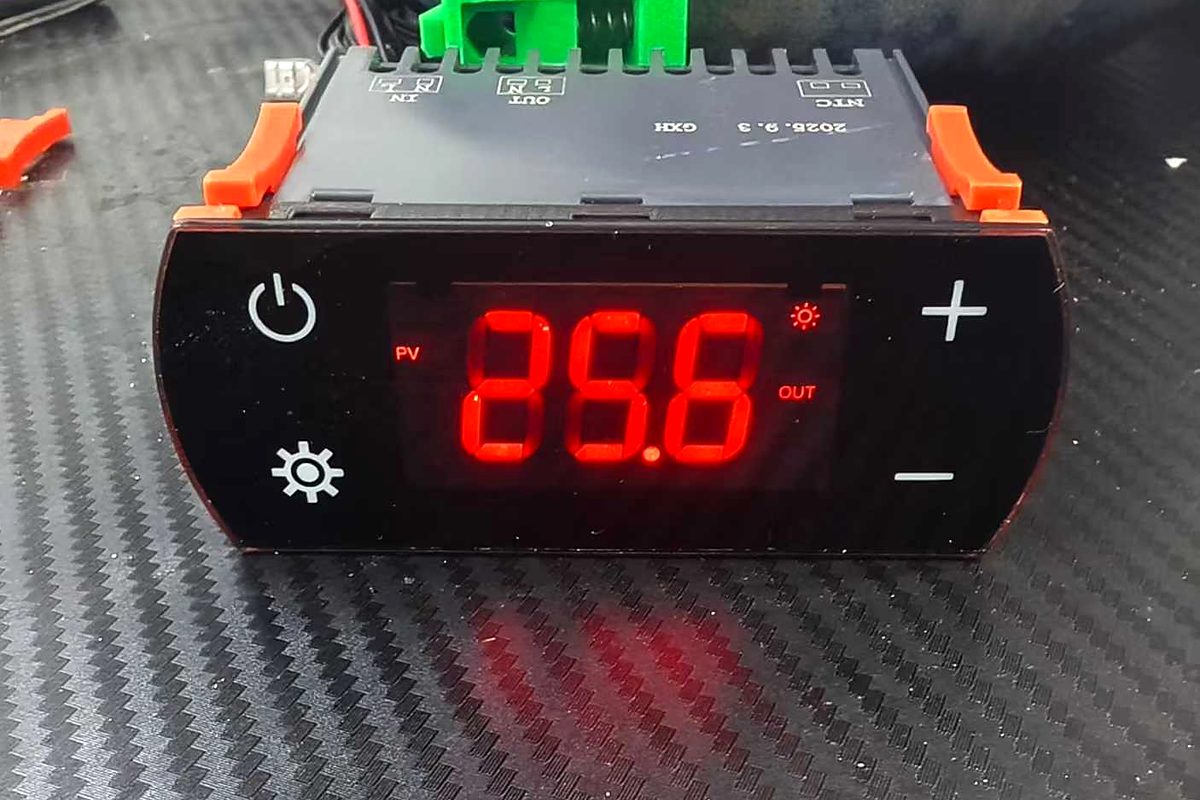
Two controllers sit on the same top rail, each driving its own side of the enclosure. The reason breeders pay for it is a gradient: a warm end the animal can bask in and a cool end it can retreat to, without heating the whole box to one number.
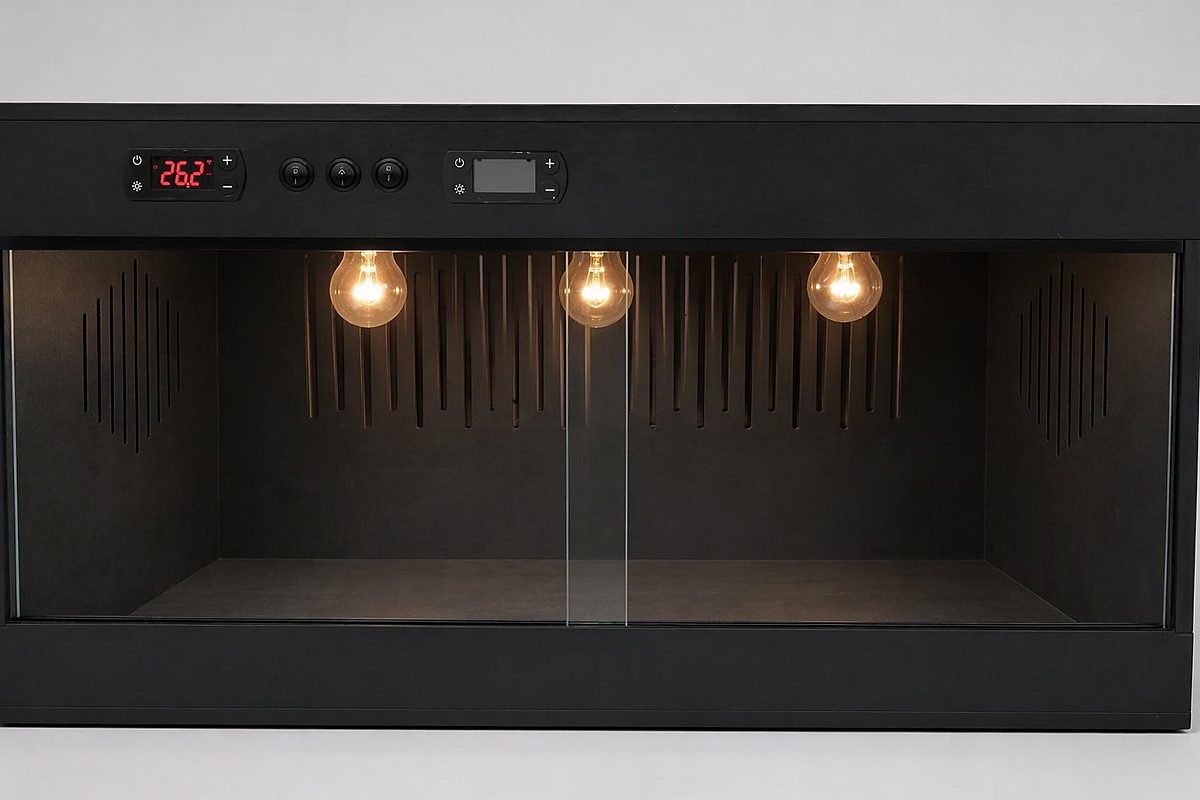
It reads as two temperature displays on the front rail — the photo above is that unit.
The panels are what make both the flat-pack and the temperature control possible. They are not single-skin plastic sheet.
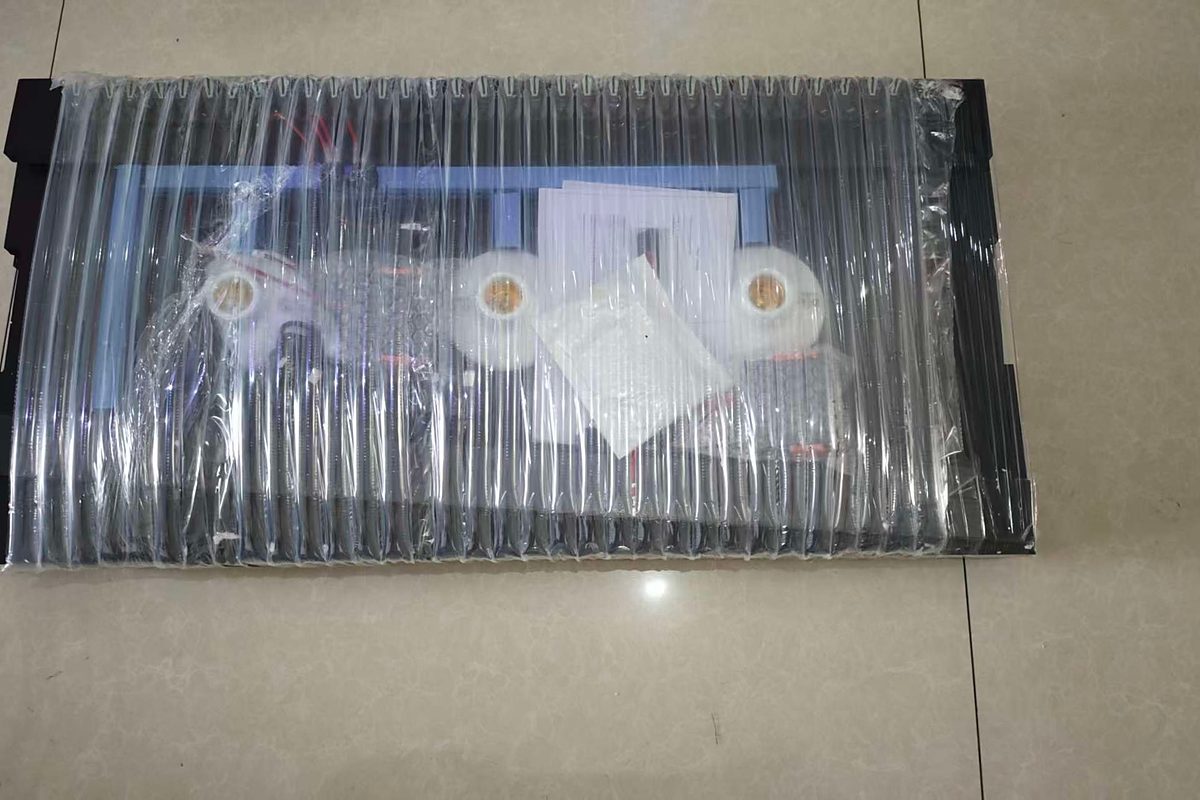
A 120×60×60 cm enclosure is 0.43 m³ standing up. In its carton it is 0.1219 m³ — under a third of that. The gap is the whole reason the freight works: you are shipping panels and glass, not air.
Every size in the range packs into a carton between 15 and 16 cm deep. That is also why the box survives the trip better than a glass aquarium does.
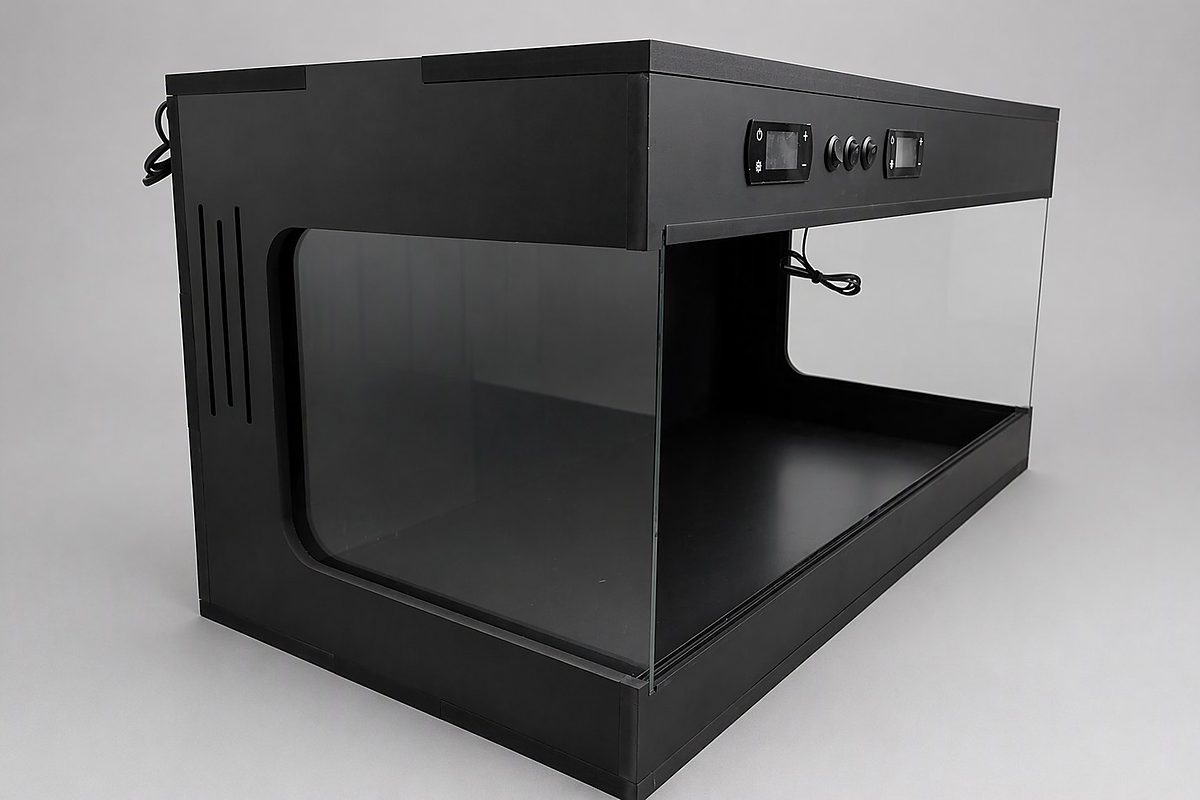
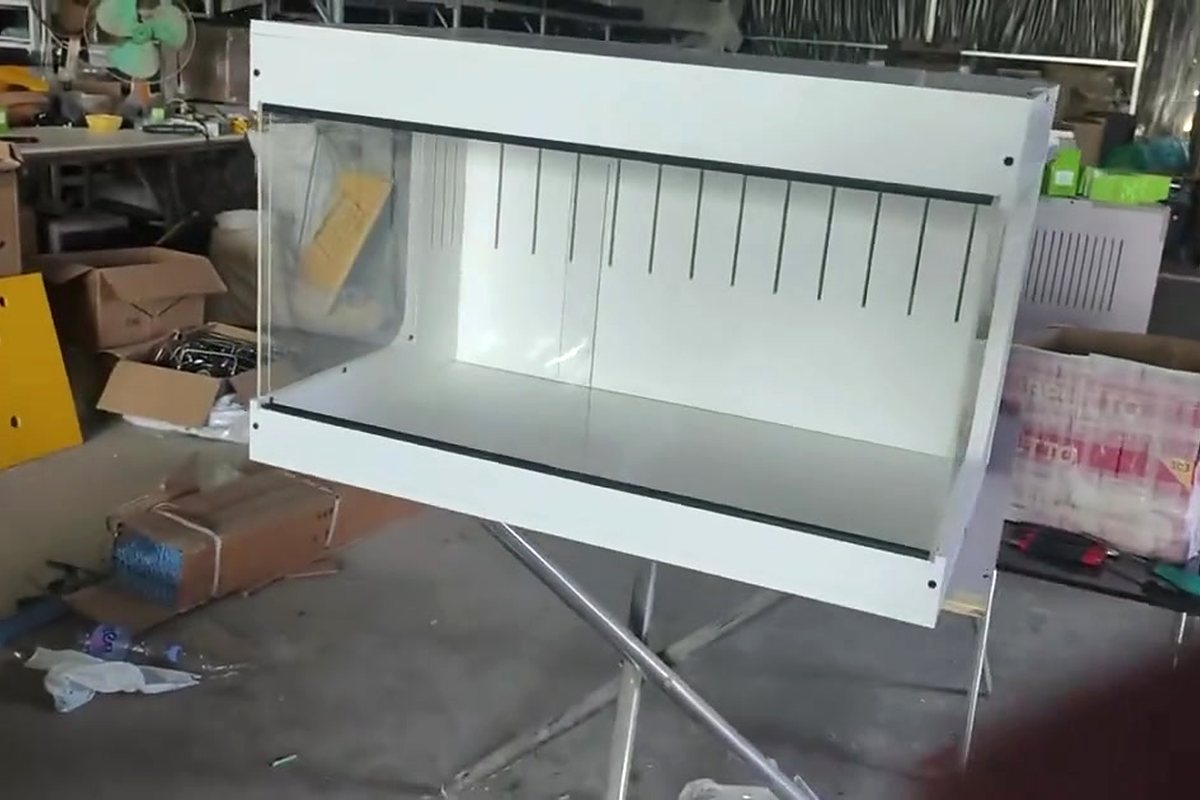
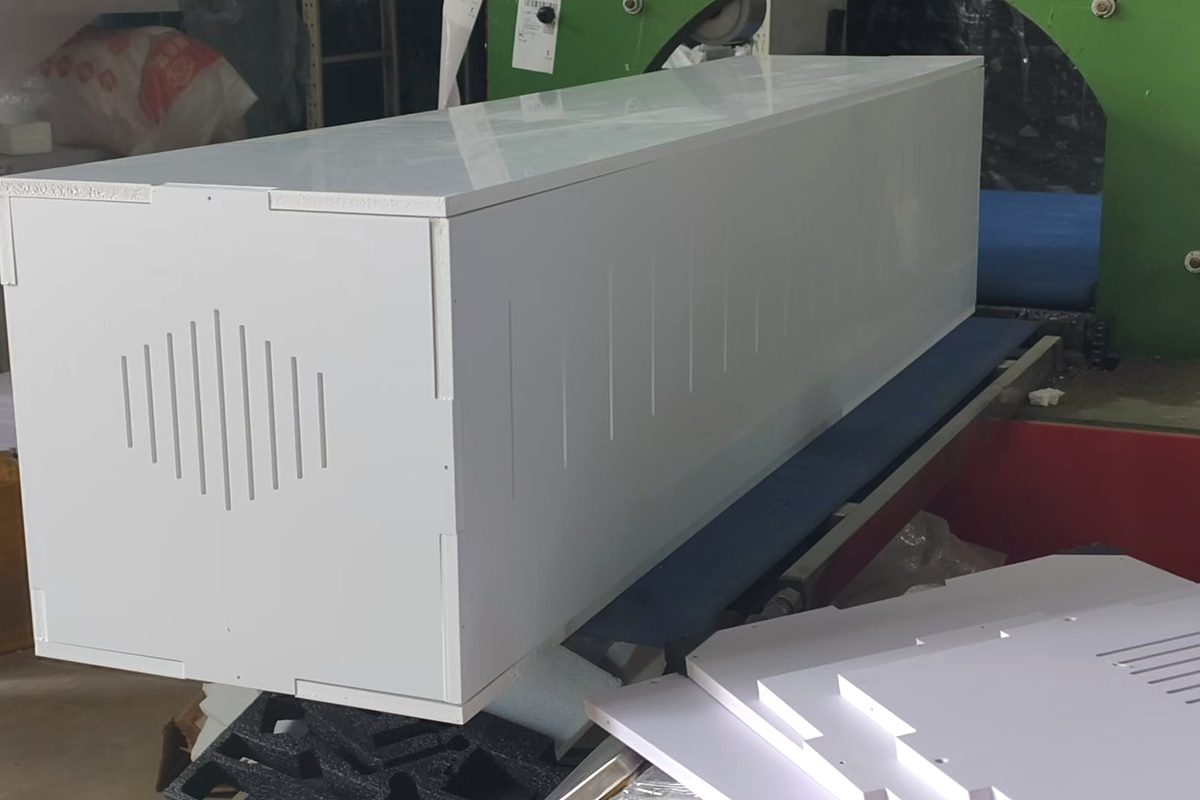
The unit as it leaves the workshop, then the parts buyers ask to see before ordering: the front with both panes shut, the empty interior, the side panel joint, and the vent slots with the lamps running behind them.
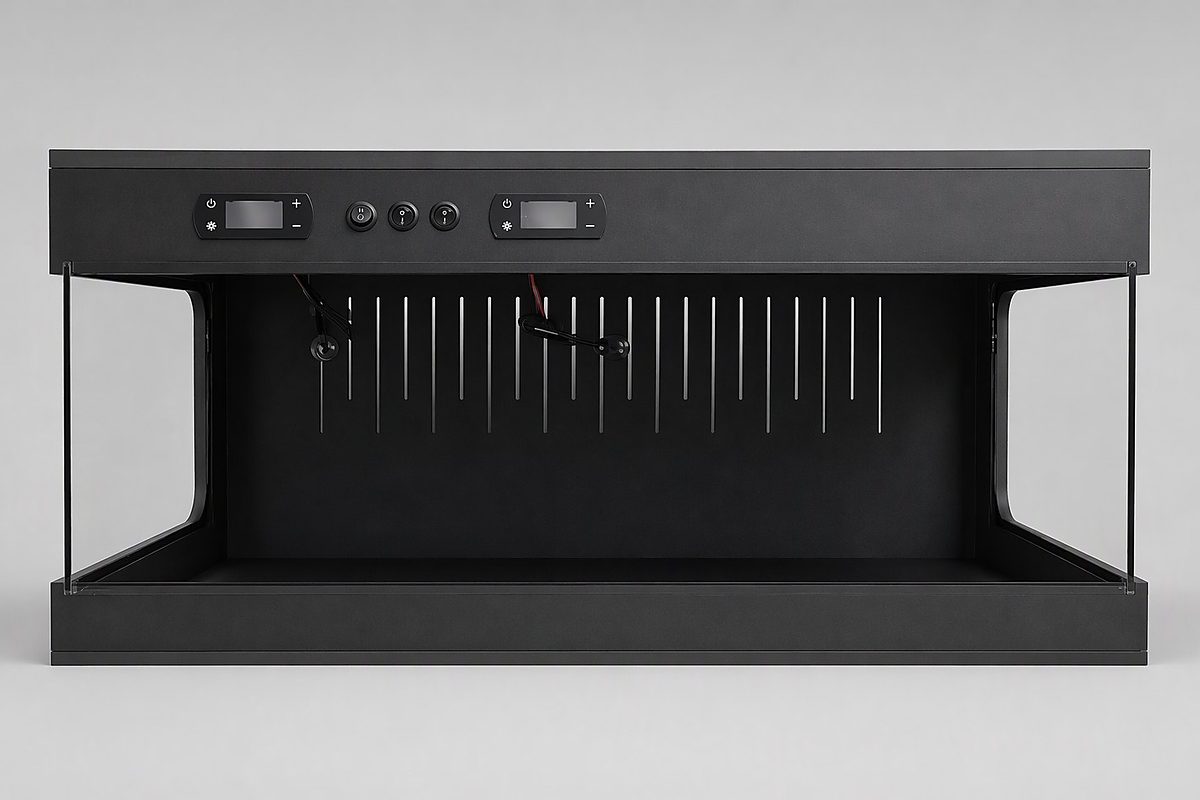
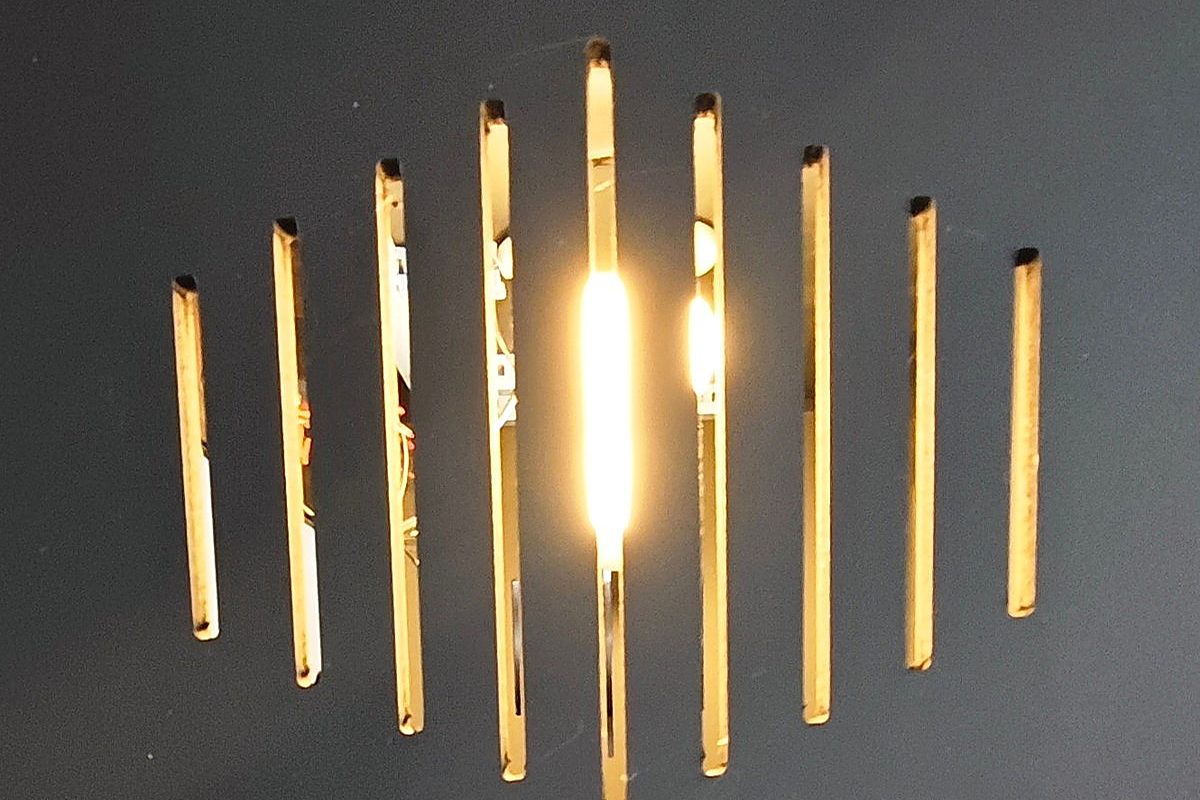
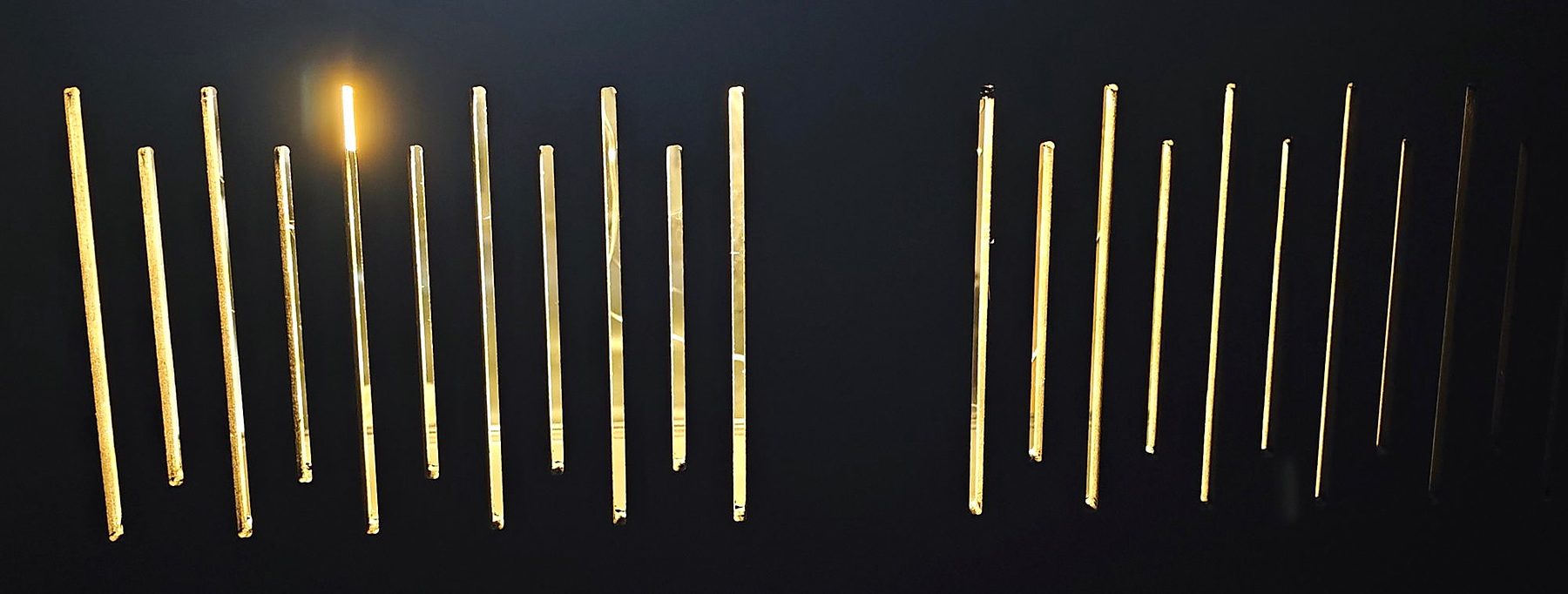
These are not drilled holes and not pressed dimples. The cutter goes straight through the panel, which is why the lamp light comes out of the slot instead of glowing around it.
The slots are staggered in length rather than cut as one long opening, so more material stays between the vents than a single long cut would leave.
Warm air and moisture both leave through here. That is also why a heated box dries out, and why our test record logs humidity beside the temperature.
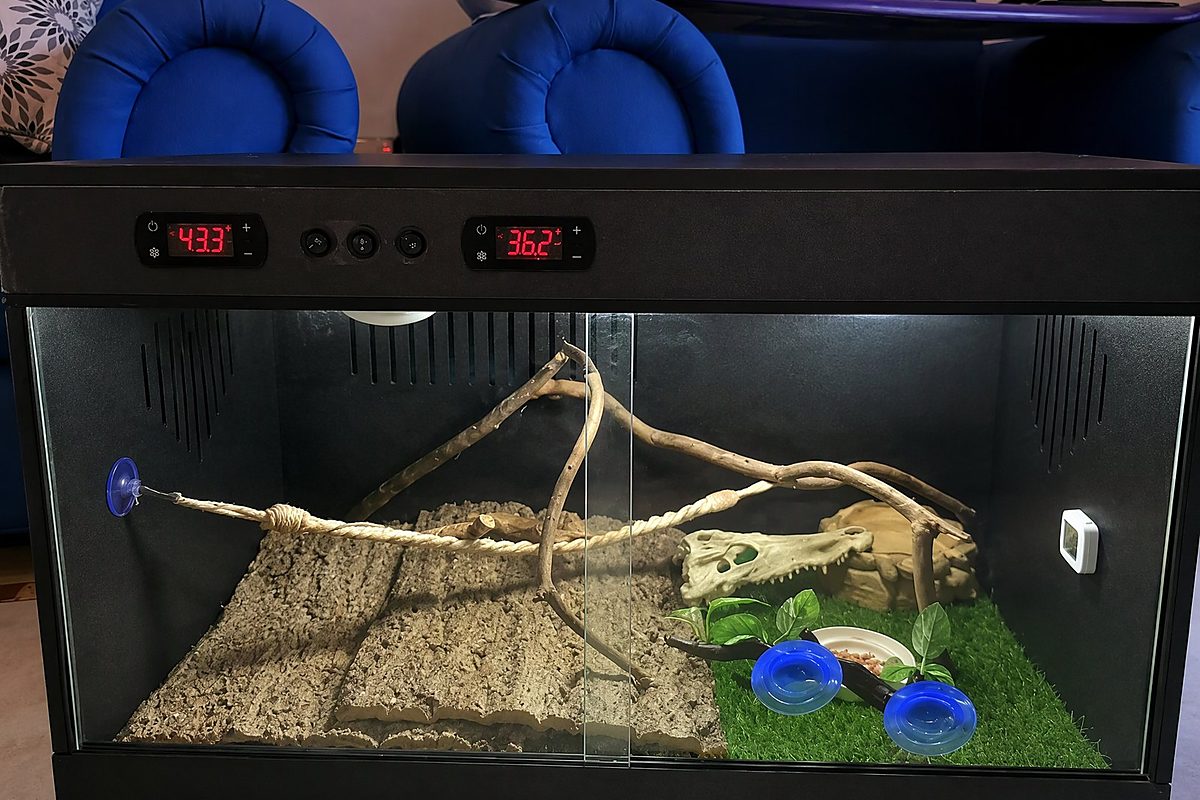
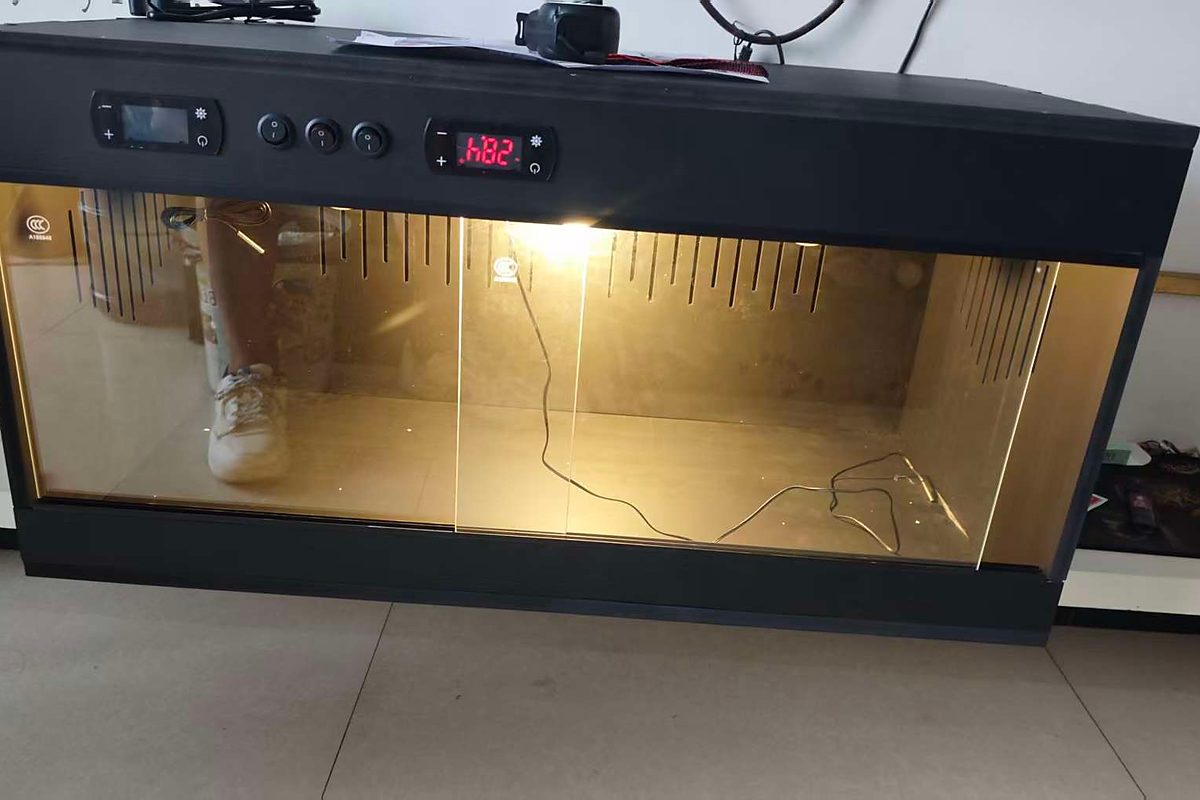
This unit went to a buyer in Qatar and was photographed in their own living room after they furnished it: sand on one side, mat on the other, branches across both, bowls and plants in place.
It is the most useful photo we have of the enclosure in real use. You can see the panel joints, the glass seam and the vent slots at full size, lit by a room rather than by a studio.
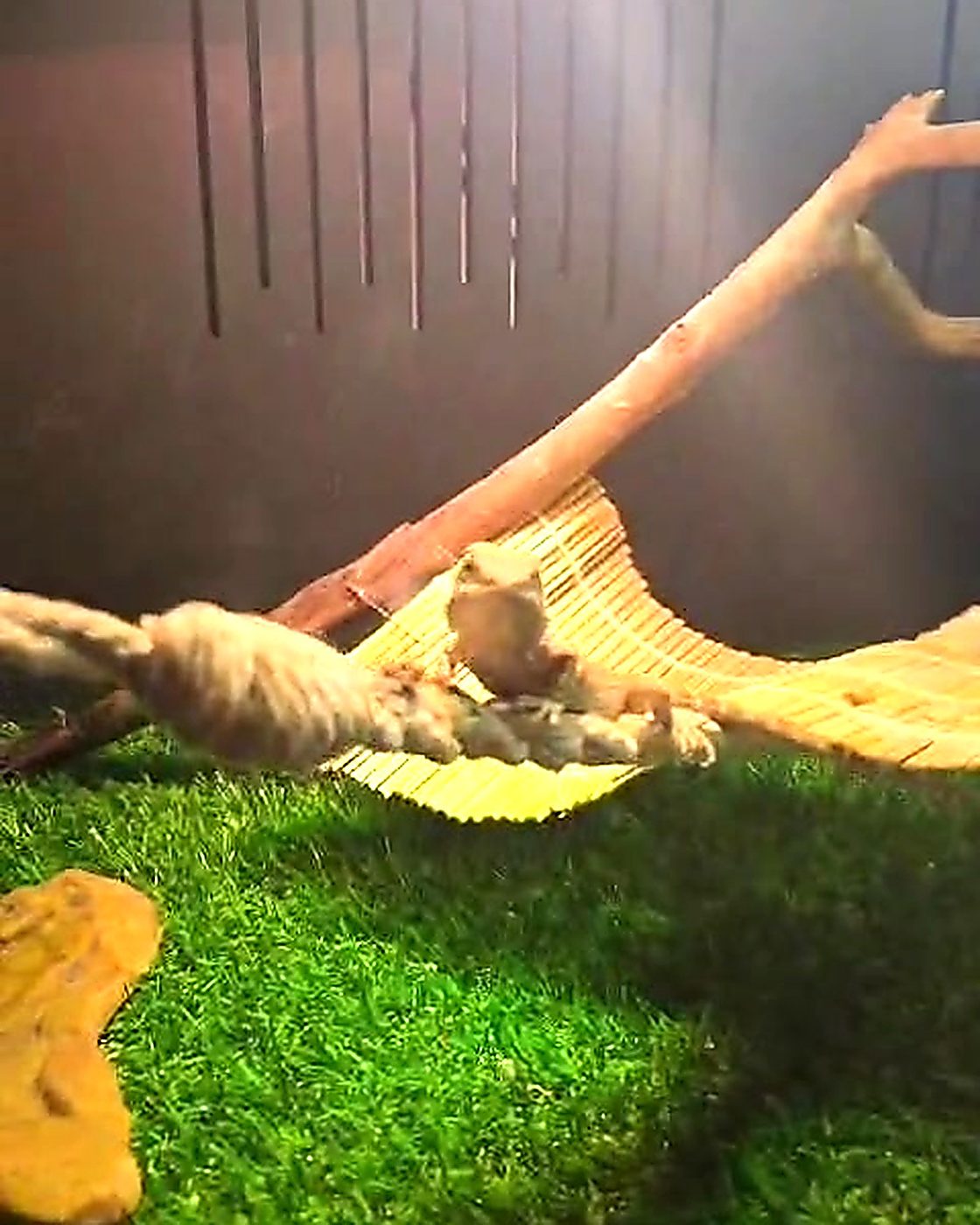
The same enclosure filmed by the customer after they re-scaped it: bamboo hammocks instead of the original layout, sand and mat underfoot, the two branches still carrying the weight.
What we wanted you to see here is the back panel. The slot groups are doing the venting at both ends, and the black face has not warped or gone chalky with the lamps running over it.
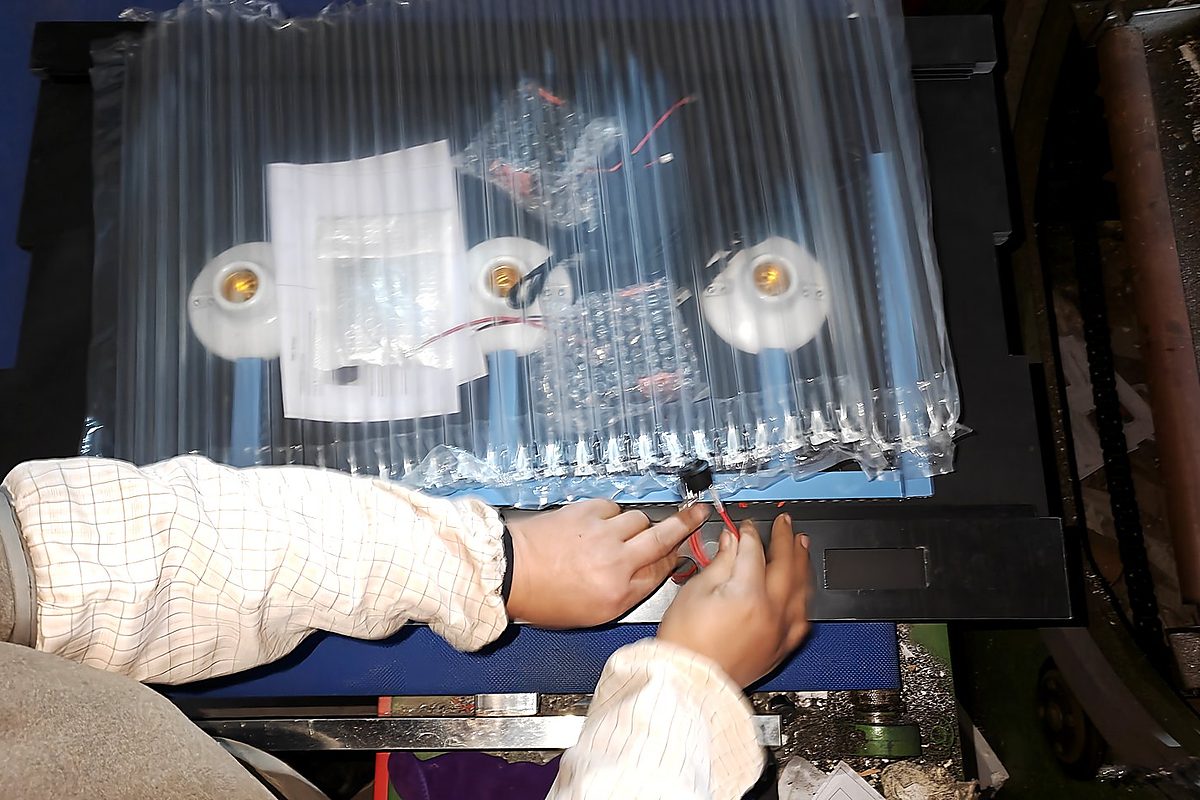
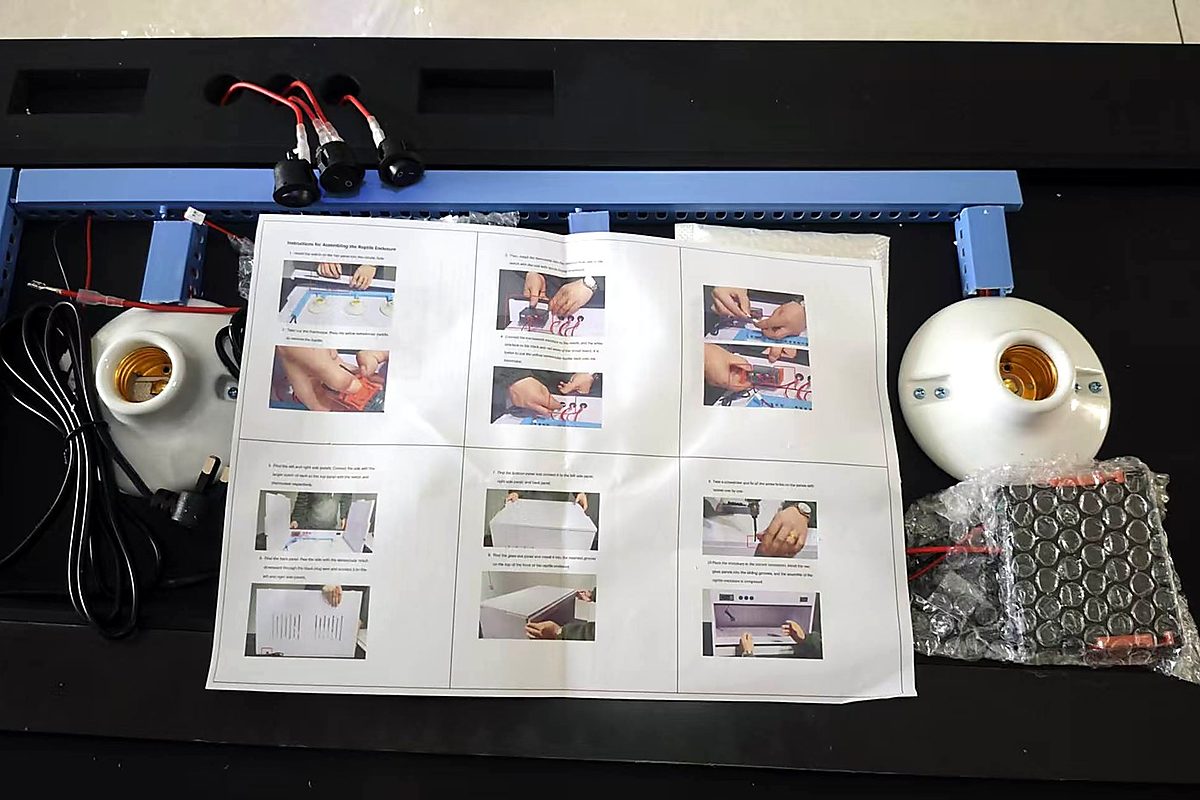
The rail arrives with the controller, the sockets and the wiring already on it. What the buyer does is fix the panels, hang the rail and close the glass — not run four separate lamps to four separate plugs. That is also why our carton depth stays at 15–16 cm: the rail goes in flat, next to the panels.
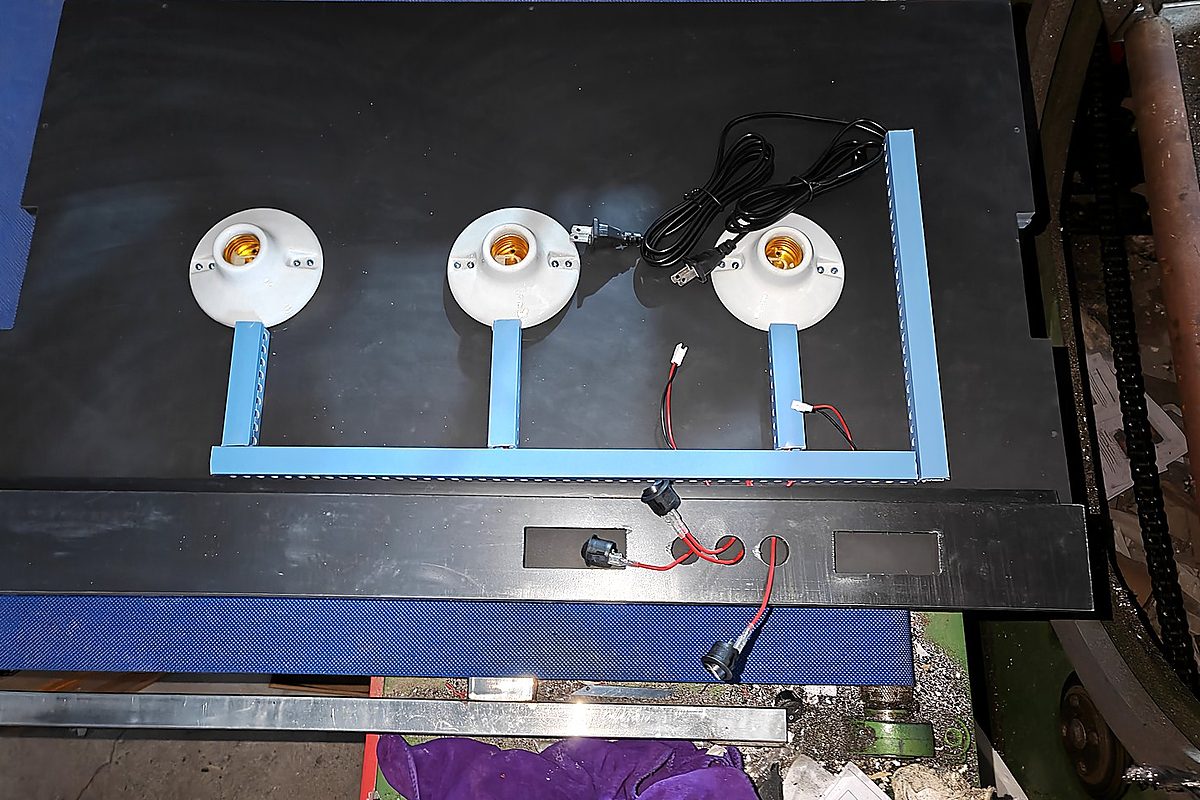
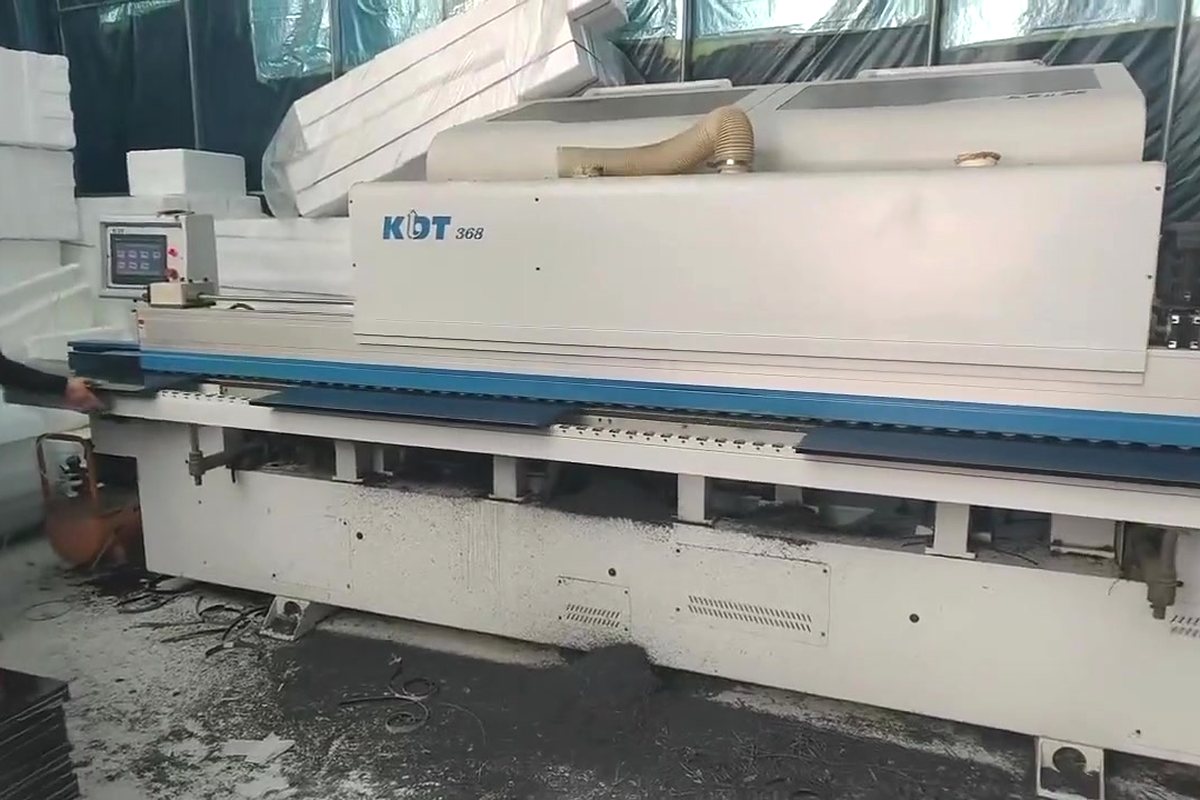
The panels are cut and edge-banded on our own machine, not brought in finished. That is why a size change is a setup change rather than a new supplier, and why the carton depth stays fixed when you alter a shelf.
CBM comes straight off the carton, so you can cost the ocean freight before you ask us for a price.
| Outer size L×W×H (cm) | Carton (cm) | kg / carton | m³ / carton | ≈ pcs per 40HQ |
|---|---|---|---|---|
| 40×30×30 | 45×15×35 | 4 kg | 0.0236 | ≈ 2,924 pcs |
| 50×30×30 | 55×15×35 | 5 kg | 0.0289 | ≈ 2,448 pcs |
| 60×40×40 | 65×15×45 | 9 kg | 0.0439 | ≈ 1,547 pcs |
| 80×40×40 | 85×15×45 | 11 kg | 0.0574 | ≈ 1,190 pcs |
| 80×50×50 | 85×15×55 | 14 kg | 0.0701 | ≈ 952 pcs |
| 100×40×40 | 105×15×45 | 14 kg | 0.0709 | ≈ 969 pcs |
| 100×50×50 | 105×15×55 | 17 kg | 0.0866 | ≈ 748 pcs |
| 120×50×50 | 125×15×55 | 20 kg | 0.1031 | ≈ 663 pcs |
| 120×60×60 | 125×15×65 | 22 kg | 0.1219 | ≈ 476 pcs |
How to read this: weight and carton size are off the factory packing sheet. CBM is calculated from the carton. Theoretical load is stacked from the carton: laid flat, the floor of a 40HQ (1203 × 235 cm) filled layer by layer under 269 cm of internal height, no pallets and no gaps. Every size is volume-limited, not weight-limited — a full container of even the heaviest size lands around 14 tonnes, well under payload.
Same carton, same panel system, different job. Pick by what the buyer does with it, not by what it costs.
Heated boxes carry EU LVD and EMC reports and a US UL 499:2017 test report. The reports were issued to our production partner, which is how OEM supply works; full copies are available on request.
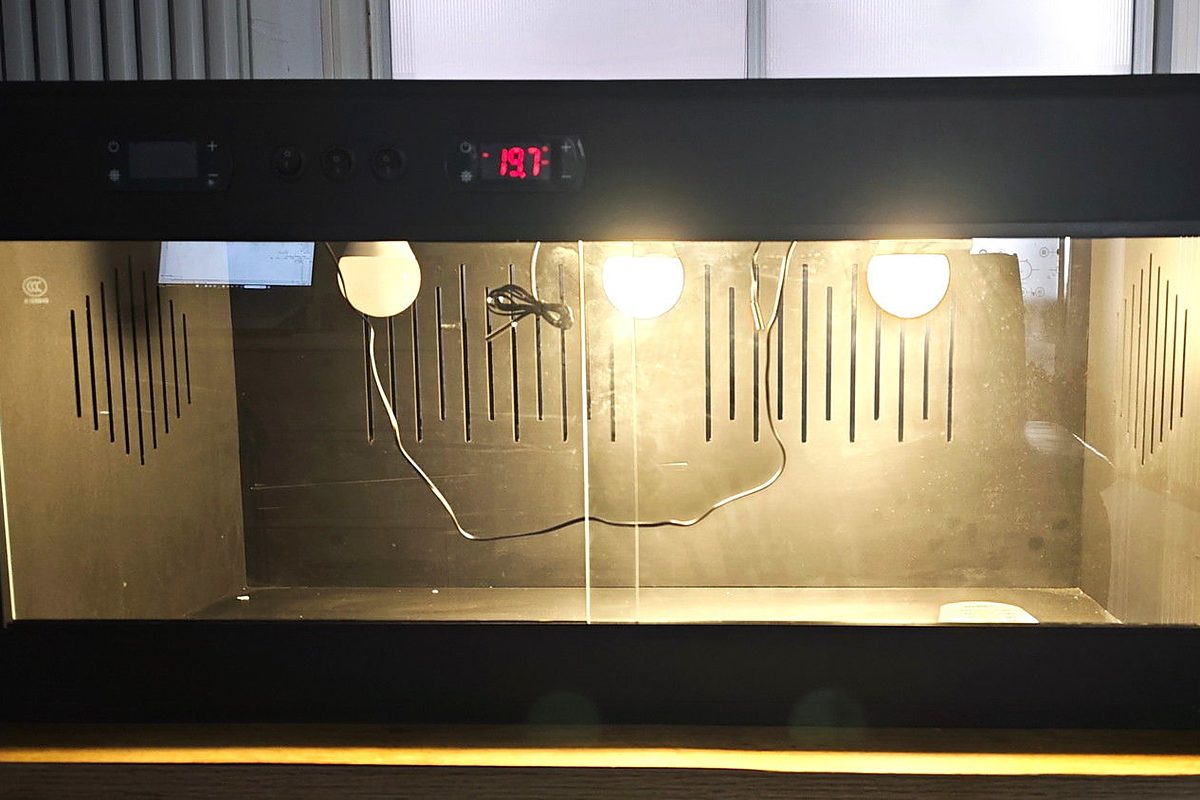
This is the sample on the bench with the sockets loaded and the glass closed. The display reads 19.7 °C — the box at switch-on, before any heat has built up.
So we do not ask you to read a figure off a photo. The numbers we quote come from the written run: time to setpoint, the band it swings in on either side of that setpoint, and the humidity it loses on the way.
Tell us the outer dimensions, the version you want and the quantity, and you get a price with the carton and loading figures already worked out.